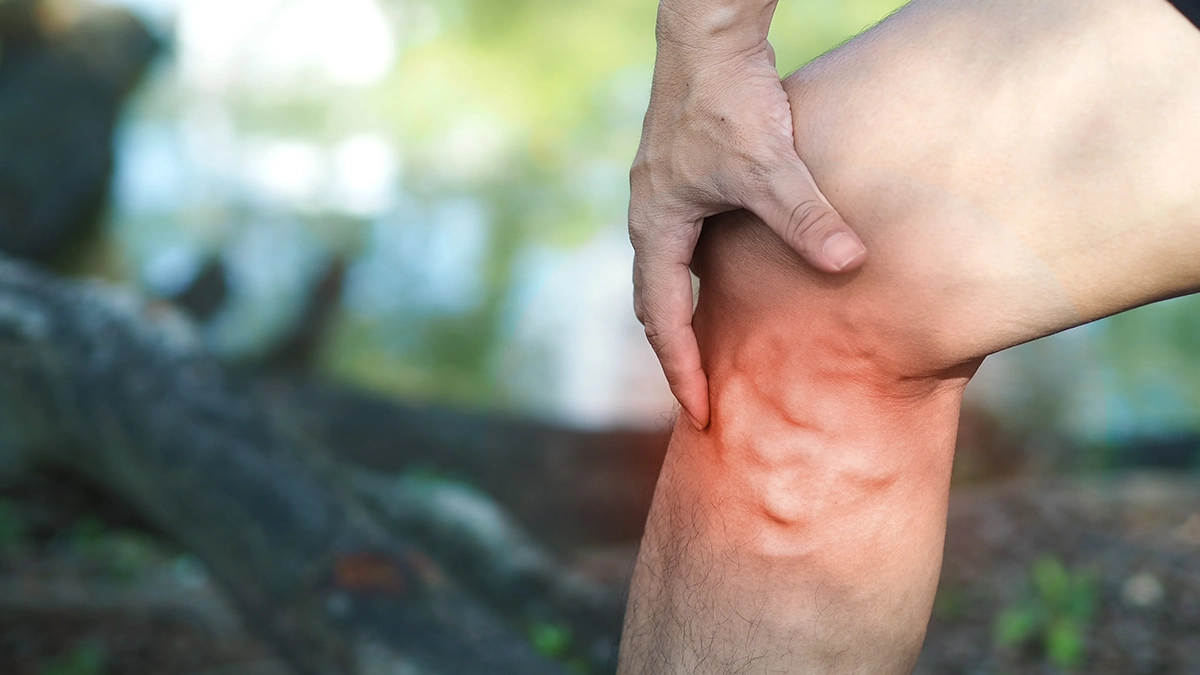

Varicose veins can cause more than visible, enlarged veins. Some people experience aching, swelling or skin changes. In more advanced venous disease, increased pressure within the veins can contribute to wounds that struggle to heal, known as venous leg ulcers.
Two studies published in October 2026 examined different treatment approaches. One investigated whether adding a compression pump could improve healing, while the other assessed outcomes after using medical adhesive to close faulty veins.
Although both offer useful insights, their findings also highlight why treatment decisions should consider the underlying vein problem and the strength of the available evidence.
Key Takeaways
- Compression remains important: Compression therapy and wound care are established treatments for venous leg ulcers, helping reduce swelling and support healing.
- Additional compression devices may not improve outcomes: The IPCOTT trial found no clear healing benefit from adding intermittent pneumatic thigh compression to standard care.
- Medical adhesive closure shows promising results: A study reported an 81.3% ulcer healing rate, although its design could not establish whether adhesive treatment was more effective than other approaches.
- Treating underlying venous reflux matters: Earlier research supports addressing suitable faulty superficial veins alongside compression and wound care to improve healing.
- Treatment should be individualised: The choice of treatment depends on the underlying circulation problem, ulcer characteristics and each patient's needs.
How Can Varicose Veins Contribute to Leg Ulcers?
Leg veins contain valves that help blood flow towards the heart. When these valves weaken, blood can flow backwards, causing pressure to build up within the veins. This is known as venous reflux.
Over time, sustained pressure can damage the surrounding skin and contribute to ulcers that are slow to heal. However, not everyone with varicose veins develops leg ulcers.
Signs that may warrant assessment include:
- Persistent leg swelling
- Skin discolouration
- Itching
- Wounds that struggle to heal
A vascular assessment, including a duplex ultrasound scan, can help identify faulty veins and determine whether treatment may be appropriate.
Compression Remains Important in Venous Leg Ulcer Treatment
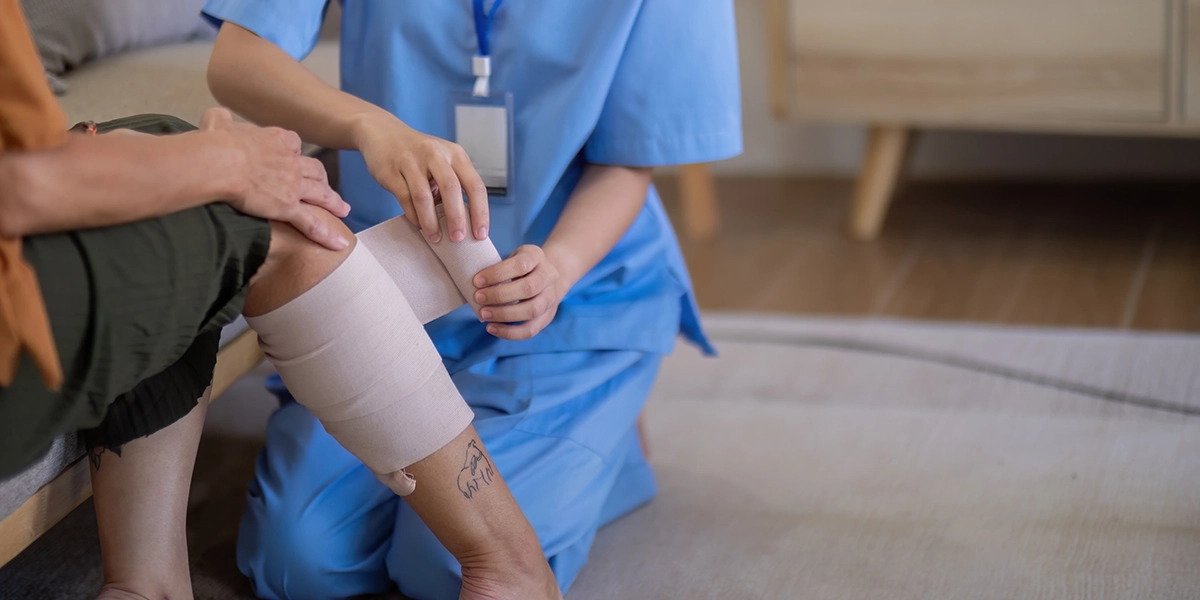
Compression therapy remains an established part of venous leg ulcer management. Compression bandages or stockings help improve blood return towards the heart and reduce swelling, while appropriate wound care supports healing.
Other measures that may support ulcer management include:
- Walking and ankle movements: These activities help the calf muscles support blood circulation in the legs.
- Leg elevation: Raising the legs when appropriate may help reduce swelling.
- Regular wound reviews: Monitoring healing progress allows healthcare professionals to measure changes, adjust dressings and address difficulties with compression.
However, compression must be selected according to the patient's circulation, particularly when arterial disease is also present. It also does not directly correct the underlying venous reflux, which may require separate assessment and treatment.
Can Adding a Compression Pump Improve Leg Ulcer Healing?
The October 2026 IPCOTT trial investigated whether intermittent pneumatic thigh compression could improve healing in patients with difficult-to-heal venous leg ulcers.
The study involved 136 adults, including some with arterial circulation problems. Participants received either usual compression and wound care or the same treatment supplemented by an inflatable thigh sleeve connected to a pump.
After 16 weeks, researchers reported the following outcomes:
| Outcome | Compression Pump Group | Usual-Care Group |
|---|---|---|
| Complete wound healing | 16.9% | 18.3% |
| Median reduction in wound size | 64.0% | 67.7% |
| Pain and quality of life | No demonstrated additional improvement | Reference group |
The trial did not demonstrate a clear benefit from adding the thigh compression device to standard care.
However, fewer participants were recruited than planned, and device records showed lower daily use than prescribed. These limitations mean that small potential benefits remain uncertain.
Importantly, the findings concern this particular additional device. They do not undermine the established role of standard compression therapy in venous leg ulcer treatment.
Can Medical Adhesive Help Treat Venous Leg Ulcers?
The second study examined cyanoacrylate closure, a procedure that uses medical adhesive to seal faulty superficial veins and reduce abnormal backward blood flow.
Researchers followed 125 patients across 17 centres. Participants received adhesive treatment alongside wound care and multilayer compression, while some underwent additional vein procedures.
At the 12-month follow-up, researchers reported:
- 81.3% ulcer healing rate: A substantial proportion of patients experienced wound closure during the study period.
- 92-day median healing time: The reported median time taken for ulcers to heal.
- 17.0% recurrence rate: Some patients experienced ulcer recurrence despite treatment.
Reported local complications included inflammatory lumps, a hypersensitivity reaction and vein inflammation.
Although the findings suggest that adhesive closure may be useful for selected patients, the study had important limitations.
There was no comparison group, making it difficult to determine how much healing resulted specifically from the adhesive rather than compression, wound care or additional procedures.
The study also did not establish whether adhesive closure performs better than endovenous laser treatment or radiofrequency ablation. Manufacturer employees were among the authors, reinforcing the importance of independent research.
Why Does Treating the Underlying Vein Problem Matter?
The two studies examined different interventions, but they highlight the distinction between supporting wound healing and addressing the underlying venous reflux.
Compression and wound care remain important, while treating suitable faulty superficial veins may provide additional benefits.
This is supported by the 2018 EVRA randomised trial, which found that early treatment of faulty superficial veins alongside compression led to faster ulcer healing than delaying vein treatment.
Taken together, the studies highlight three considerations:
- Additional devices do not necessarily improve healing: The IPCOTT trial found no clear additional benefit from its particular thigh compression pump.
- Treating venous reflux may support healing: Earlier research supports treating suitable faulty superficial veins alongside compression and wound care.
- Promising outcomes do not establish superiority: The adhesive closure study reported encouraging results but could not demonstrate that the procedure was better than other treatments.
Healing rates and times from separate studies should also not be compared directly, as differences in patients, ulcer severity and accompanying care can influence outcomes.
Making Informed Choices About Venous Leg Ulcer Treatment
For patients with varicose veins and leg ulcers, identifying the underlying cause is important when considering treatment.
During a consultation, useful questions include:
- Is the ulcer caused by venous reflux, or could other circulation problems be contributing?
- Does an ultrasound scan identify faulty veins that may benefit from treatment?
- What additional benefits could the proposed procedure offer beyond compression and wound care?
- What are the potential risks and alternatives?
- How will healing be monitored, and what can help reduce recurrence?
Patients should also discuss how the wound affects their mobility, sleep and everyday activities, particularly if compression is difficult to tolerate.
Even after an ulcer heals, continued compression when appropriate, physical activity and follow-up may help reduce recurrence.
A wound that remains open after two weeks should be medically assessed, particularly if accompanied by swelling or skin changes. Earlier assessment is appropriate for wounds that are worsening or show signs of infection.
Applying Research to Varicose Vein and Leg Ulcer Care
Recent research continues to improve our understanding of how venous leg ulcers may be managed. However, these studies also demonstrate that adding newer treatments does not automatically lead to better healing outcomes. What matters is identifying the underlying cause and selecting interventions supported by clinical evidence and individual patient needs.
At The Vascular & General Surgery Centre, Dr Sujit Singh Gill assesses varicose veins and related venous conditions with consideration for each patient's symptoms, circulation and overall health. This helps guide discussions about appropriate management options, including compression therapy and procedures to address faulty veins where indicated.
If you have persistent leg swelling, skin changes or a wound that is slow to heal, schedule a consultation with Dr Sujit Singh Gill for an individual assessment.
FAQs About Varicose Veins and Leg Ulcers
Can venous leg ulcers heal without surgery?
Yes, some venous leg ulcers can heal with appropriate compression therapy, wound care and regular monitoring. However, healing depends on factors such as ulcer severity, circulation and underlying venous disease. Treating faulty superficial veins may improve healing outcomes in suitable patients, even when surgery is not required.
Can venous leg ulcers come back after healing?
Yes, venous leg ulcers can recur, particularly when underlying venous reflux persists. Continued compression therapy, where appropriate, regular physical activity and follow-up care may help reduce this risk. Some patients may also benefit from procedures that address faulty superficial veins to lower the likelihood of recurrence.
How do I know if my leg ulcer is caused by varicose veins?
Venous leg ulcers often develop around the inner ankle and may occur alongside leg swelling, skin discolouration or visible varicose veins. However, other conditions, including arterial disease, can also cause leg ulcers. A vascular assessment, potentially including a duplex ultrasound scan, can help identify the underlying cause and guide treatment.
References
- Bosanquet DC et al. Intermittent pneumatic thigh compression for the treatment of lower limb wounds (IPCOTT): a randomised control trial. J Wound Care. 2026;35(10):901–914. DOI: 10.12968/jowc.2026.0047.
- Gibson K et al. Twelve-Month Results of Cyanoacrylate Closure in Patients with Venous Leg Ulceration. J Vasc Surg Venous Lymphat Disord. 2026:102635. DOI: 10.1016/j.jvsv.2026.102635.
- Gohel, M. S., Heatley, F., Liu, X., Bradbury, A., Bulbulia, R., Cullum, N., Epstein, D. M., Nyamekye, I., Poskitt, K. R., Renton, S., Warwick, J., Davies, A. H., & EVRA Trial Investigators (2018). A Randomized Trial of Early Endovenous Ablation in Venous Ulceration. The New England journal of medicine, 378(22), 2105–2114. https://doi.org/10.1056/NEJMoa1801214