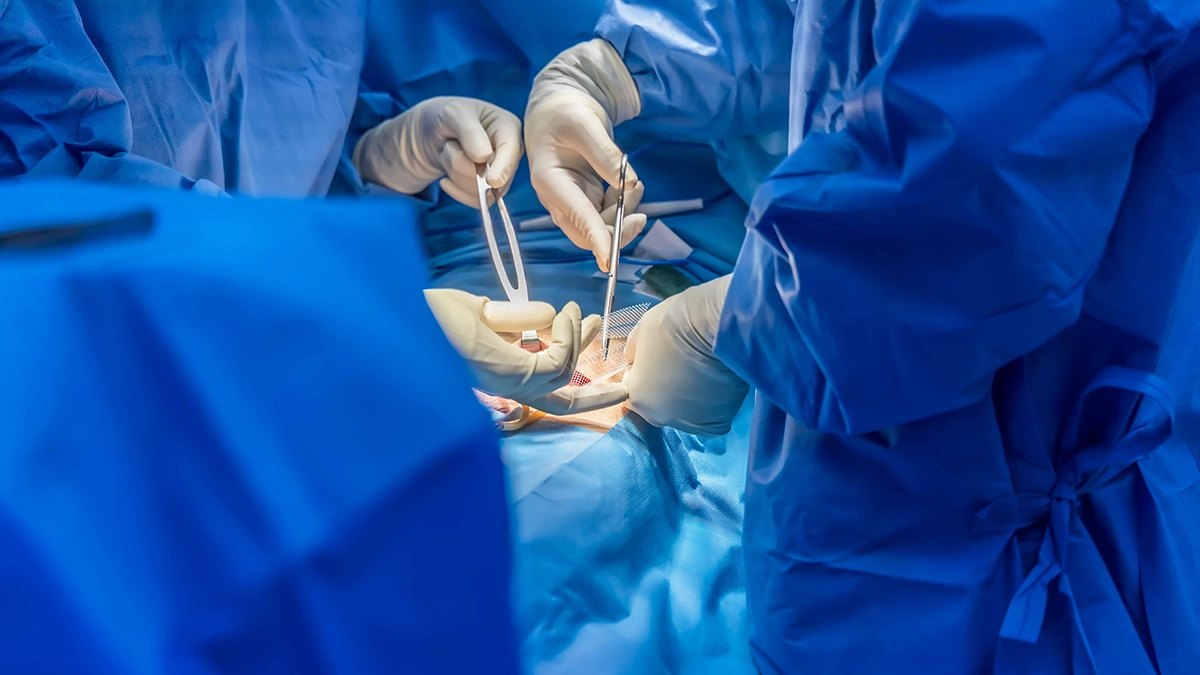

When considering surgery for an inguinal hernia, patients may encounter several treatment options, including open surgery, laparoscopic (keyhole) surgery and robotic-assisted procedures. With advances in surgical technology, it is natural to wonder whether newer techniques offer better results, or whether established approaches remain equally effective.
Two studies published in October 2026 offer different perspectives on this question. One examines the clinical outcomes and practical benefits of robotic-assisted hernia repair, while the other explores how affordable mesh repair can be delivered in a resource-limited setting.
Together, they highlight an important consideration: the quality of hernia surgery depends on more than the technology or materials used. Appropriate surgical techniques, clinical experience and access to reliable care all contribute to treatment outcomes.
Key Takeaways
- Robotic-assisted hernia surgery has not demonstrated consistently better outcomes than conventional laparoscopic surgery. A 2026 review of four randomised trials involving 482 adults found no clear overall advantage in postoperative complications or pain.
- Robotic surgery may involve higher costs without corresponding clinical benefits. Two studies in the review reported higher costs, although further research is needed to determine whether certain patients or procedures may benefit.
- Affordable mesh repair can produce encouraging outcomes in resource-limited settings. A Sierra Leone study reported no mesh infections or recurrences among patients assessed at one and two years, although follow-up numbers were limited.
- Surgical quality depends on more than technology or mesh costs. Appropriate surgical techniques, surgeon experience, patient selection and postoperative care all contribute to treatment outcomes.
- There is no single best approach to inguinal hernia repair for every patient. The choice between open, laparoscopic and robotic-assisted surgery should account for the hernia's characteristics, the patient's health and the potential benefits and risks of each technique.
How Do Different Hernia Surgery Techniques Compare?
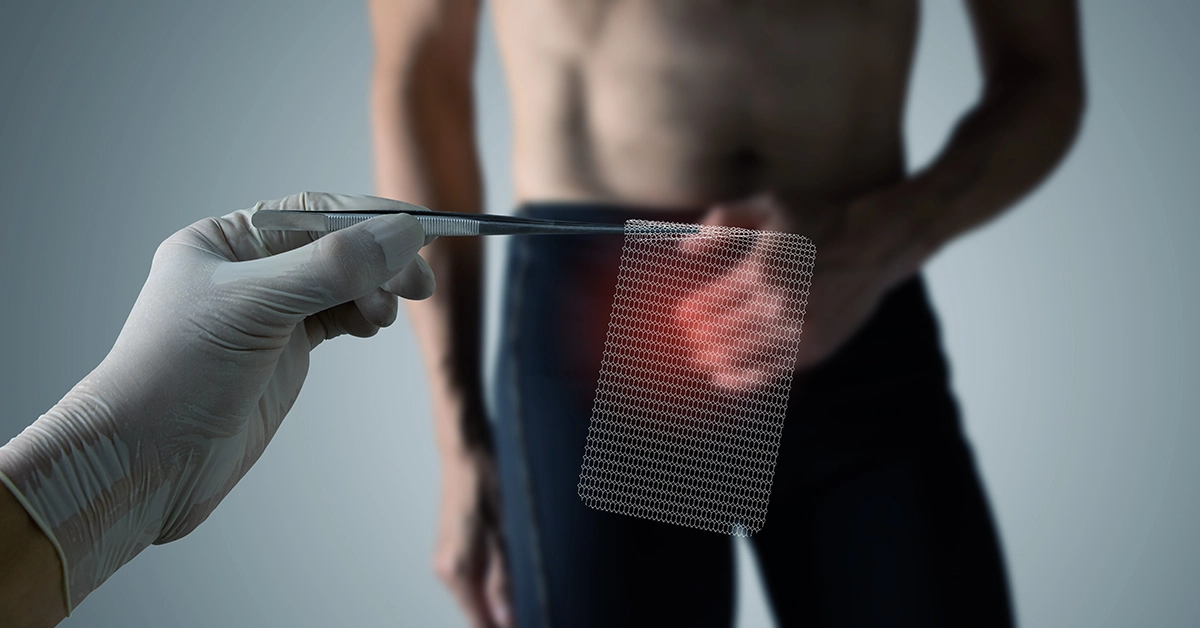
An inguinal hernia occurs when fatty tissue or part of the bowel protrudes through a weakened area of the abdominal wall near the groin. Surgery involves returning the protruding tissue to its normal position and repairing the weakened area, often with surgical mesh to reinforce the repair.
Several surgical approaches are available, each with its own considerations.
| Surgical Approach | How It Works | Key Considerations |
|---|---|---|
| Open hernia repair | The surgeon makes an incision in the groin to access and repair the hernia. | Can often be performed under local anaesthesia and may be suitable for patients who cannot undergo general anaesthesia. |
| Laparoscopic hernia repair | Small incisions allow the surgeon to operate using a camera and specialised instruments. | May offer advantages in postoperative discomfort and recovery for selected patients, particularly in bilateral or recurrent hernias. |
| Robotic-assisted hernia repair | The surgeon controls robotic instruments to perform a minimally invasive repair. | Provides enhanced instrument articulation and visualisation, although its additional clinical benefits over conventional laparoscopy remain uncertain. |
The appropriate approach depends on factors such as the hernia's characteristics, whether it has been repaired previously, the patient's overall health and the surgeon's experience.
Does Robotic-Assisted Hernia Surgery Offer Better Outcomes?
Robotic-assisted surgery offers additional technical capabilities, but these do not necessarily translate into better outcomes for every patient.
A systematic review and meta-analysis published on 7 October 2026 examined four randomised controlled trials involving 482 adults, most of whom were men. The researchers compared robotic-assisted and conventional laparoscopic inguinal hernia repair, assessing clinical outcomes alongside surgeons' physical workload and operating conditions.
What Did the Researchers Find?
The review identified several findings:
- Postoperative complications: There was no clear overall advantage for robotic-assisted surgery in the complications assessed.
- Postoperative pain: The available evidence did not demonstrate a consistent improvement with robotic assistance.
- Surgeon workload and ergonomics: Assessments of physical workload and operating comfort did not establish a consistent benefit.
- Treatment costs: Two studies reported higher costs for robotic-assisted procedures.
Overall, the findings did not establish a clear clinical advantage for robotic-assisted inguinal hernia repair over conventional laparoscopy.
What Are the Limitations of These Findings?
Although randomised controlled trials provide valuable evidence, the review included relatively few participants. Surgeons' experience also varied, while differences in how postoperative pain was measured meant that these results could not be reliably combined across studies.
These limitations are important when interpreting the findings. They do not establish that robotic-assisted and conventional laparoscopic surgery produce identical outcomes, nor do they exclude potential advantages in particular clinical situations.
Rather, the available evidence suggests that claims of generally better outcomes from robotic assistance should be examined carefully.
Can Affordable Mesh Repair Deliver Good Outcomes?
While the first study examined the value of newer surgical technology, a second paper published on 12 October 2026 considered a different challenge: improving access to effective hernia repair in a setting with limited healthcare resources.
The prospective study, conducted in Sierra Leone, reported outcomes from 121 inguinal hernia repairs performed through a local hospital service using inexpensive, locally processed mesh.
What Did the Sierra Leone Study Show?
According to the published abstract, researchers reported the following outcomes:
| Study Measure | Reported Finding |
|---|---|
| Total procedures | 121 mesh repairs performed through the programme |
| Outcomes at one year | No mesh infections or recurrences among 108 repairs assessed |
| Outcomes at two years | No mesh infections or recurrences among 58 repairs assessed |
These findings are encouraging, particularly given the challenges of providing surgical care in resource-limited settings.
However, fewer repairs were assessed at two years than at one year, and the study did not include a randomised comparison with commercially manufactured mesh or other surgical approaches. The findings therefore provide useful early evidence from this particular service rather than proof of equivalent outcomes across different mesh products or healthcare settings.
Why Is This Research Significant?
The significance of the Sierra Leone study extends beyond the cost of surgical mesh. By combining local mesh production, hospital-based surgical care and systematic follow-up, the programme demonstrated how hernia repair could be delivered using locally available resources while achieving encouraging early outcomes.
For countries where the cost and availability of surgical supplies can restrict access to treatment, this approach offers a practical example of how locally organised services may help expand access to hernia surgery.
Applying Research to Hernia Care at The Vascular & General Surgery Centre
Advances in surgical technology continue to expand the options available for inguinal hernia repair. However, as these studies demonstrate, newer or more expensive approaches do not necessarily produce better outcomes. What matters is selecting an appropriate technique based on clinical evidence, patient needs and the circumstances of each case.
At The Vascular & General Surgery Centre, we apply these principles when assessing and managing inguinal hernias. Rather than favouring a particular surgical approach, we consider factors such as the hernia's characteristics, the patient's overall health and the potential benefits and risks of different repair techniques. Our aim is to recommend treatment that is appropriate for each patient's condition and circumstances.
If you have been diagnosed with an inguinal hernia or would like to discuss your surgical options, schedule a consultation with Dr Sujit Singh Gill for an individual assessment.
FAQs About Hernia Surgery Techniques and Mesh Repair
Is robotic-assisted hernia surgery better than laparoscopic surgery?
Current research has not established that robotic-assisted hernia surgery consistently produces better outcomes than conventional laparoscopic surgery. Both are minimally invasive approaches, but their suitability depends on the patient's condition and the surgeon's experience. Robotic assistance may offer technical advantages in certain situations, although further research is needed to establish their clinical significance.
Does the type of mesh used affect hernia surgery outcomes?
The type of surgical mesh can influence repair considerations, but outcomes also depend on the surgical technique, the patient's condition and other clinical factors. While research from Sierra Leone reported encouraging results using inexpensive, locally processed mesh, these findings do not establish that all mesh materials provide equivalent outcomes.
What factors should patients consider when choosing hernia surgery?
The choice of surgical approach depends on several factors, including the hernia's size and location, whether it has recurred, the patient's overall health and the surgeon's experience. Patients should also discuss potential complications, postoperative discomfort, recovery expectations and the risk of recurrence before deciding on treatment.
References
- Rümmele-Vogt A, Süsstrunk J, Böttcher MT, et al. Surgeon task load, ergonomics, and clinical outcomes in laparoscopic versus robotic-assisted inguinal hernia repair: a systematic review and meta-analysis of randomized controlled trials. Journal of Robotic Surgery. 2026;20:1070. DOI: 10.1007/s11701-026-03805-8.
- Kamara AA, Mansaray FD, Lavalie D, Szymankiewicz M, Hunt LM. Prospective results of locally delivered low-cost mesh inguinal hernia repair in a low resource setting. Hernia. 2026;30:370. DOI: 10.1007/s10029-026-03874-6.